Close

Andrea Ramírez Ramírez

Professor of Low Carbon Systems and Technologies and Head of the Chemical Engineering Department | Delft University of Technology Delft, Netherlands
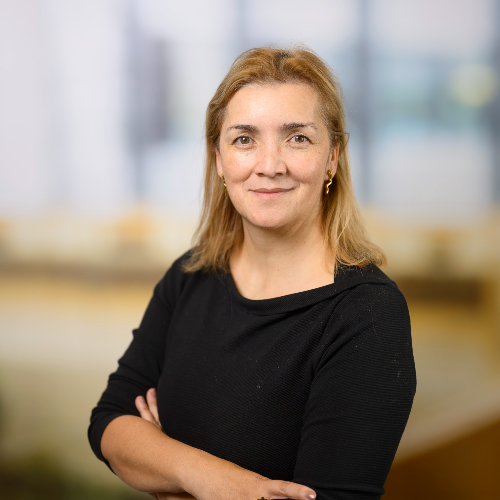
Andrea Ramírez Ramírez

Biography

Dr. Andrea Ramírez is Professor of Low Carbon Systems and Head of Chemical Engineering at TU Delft. She holds degrees in Chemical Engineering, Human Ecology, and a PhD in industrial energy efficiency. Her research focuses on assessing low-carbon technologies and their role in sustainable industry through techno-economic and environmental analysis. She has co-authored 120+ publications and is a Fellow of the Dutch Academy of Engineering.

Sessions

15:00h
Congress | Mediterranean Congress on Chemical Engineering (MeCCE)

Brownfields Reimagined: Driving Decarbonization and Innovation in Industrial Clusters – MeCCE Plenary Conference

Andrea Ramírez Ramírez
Andrea Ramírez Ramírez Delft University of Technology Professor of Low Carbon Systems and Technologies and Head of the Chemical Engineering Department Speaker

#alternativecarbonsources, #Brownfields, #decarbonisation, #industrialclusters, #petrochemicalindustry

2026-06-03 15:00 2026-06-03 16:00 Europe/Madrid Brownfields Reimagined: Driving Decarbonization and Innovation in Industrial Clusters – MeCCE Plenary Conference
We are undergoing the largest transformation in the power and industrial sectors since the Industrial Revolution. While energy systems are rapidly shifting away from fossil fuels, the chemical industry still depends heavily on them, with only ~10% of EU raw materials coming from renewable sources. Replacing fossil feedstocks with alternative carbon sources such as CO₂, biomass, and waste offers major opportunities but also complex challenges.
Current assessments often analyse technologies in isolation under ideal conditions, ignoring the complexity of real industrial clusters, where interconnected value chains mean that changes in one process affect many others.
In the UNRAVEL project, we studied pathways to defossilize the petrochemical cluster in the Port of Rotterdam using a system-wide optimization model covering 52 processes and 17 alternative technologies. Results show that local infrastructure, resources, and energy constraints are decisive, and that key technologies include gasification, pyrolysis, Fischer–Tropsch, MTO, and MTA.
Full defossilization is not yet achievable due to limited green electricity and carbon sources, highlighting the need for a phased, system-level transition strategy.
CC3. ROOM 3.11
Wed 3 15:00h - 16:00h CC3. ROOM 3.11 Pre-registration for the congress

Make sure you don’t miss a thing!

Subscribe to our newsletter and stay up to date with the latest news from Expoquimia26
Close